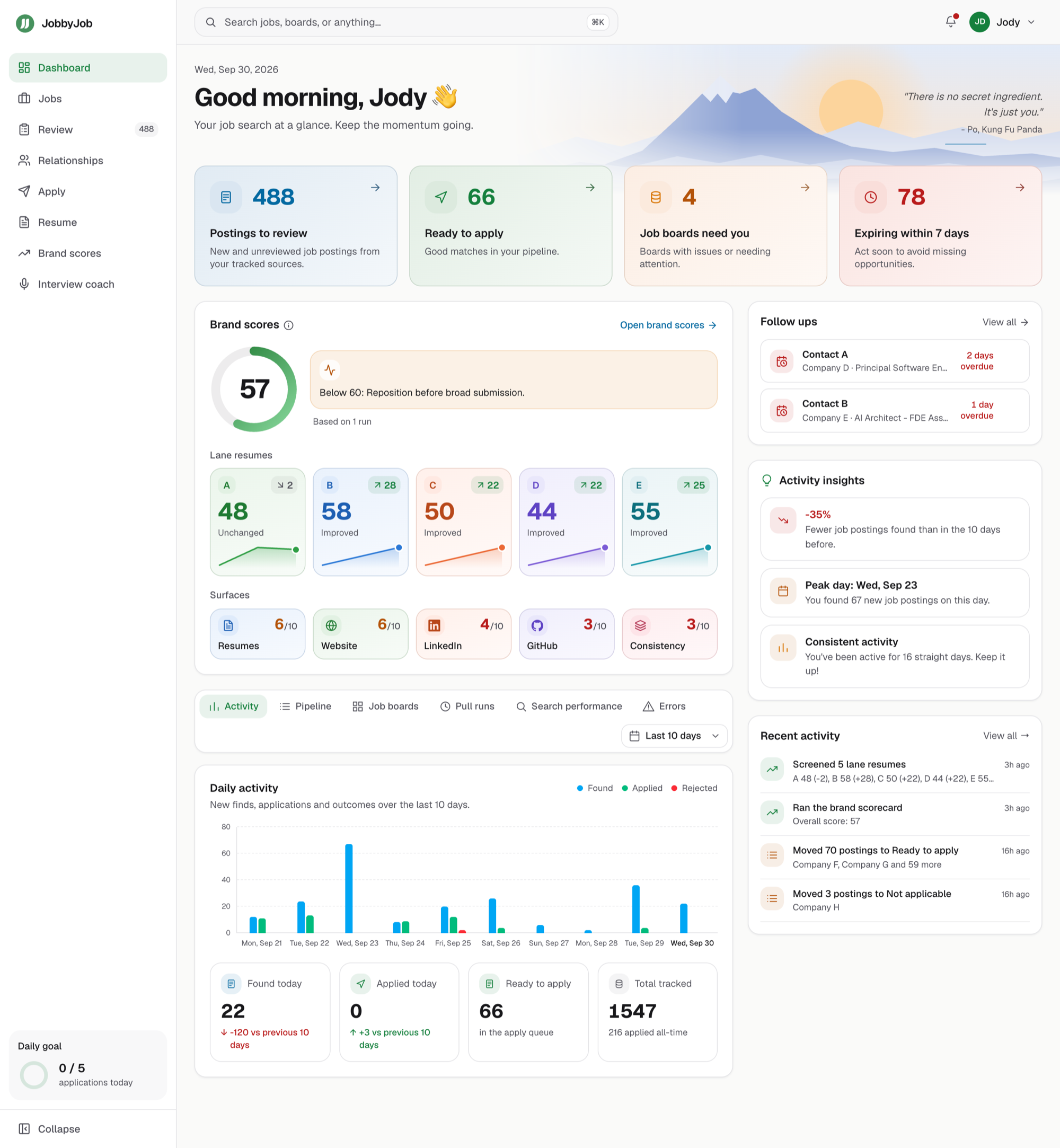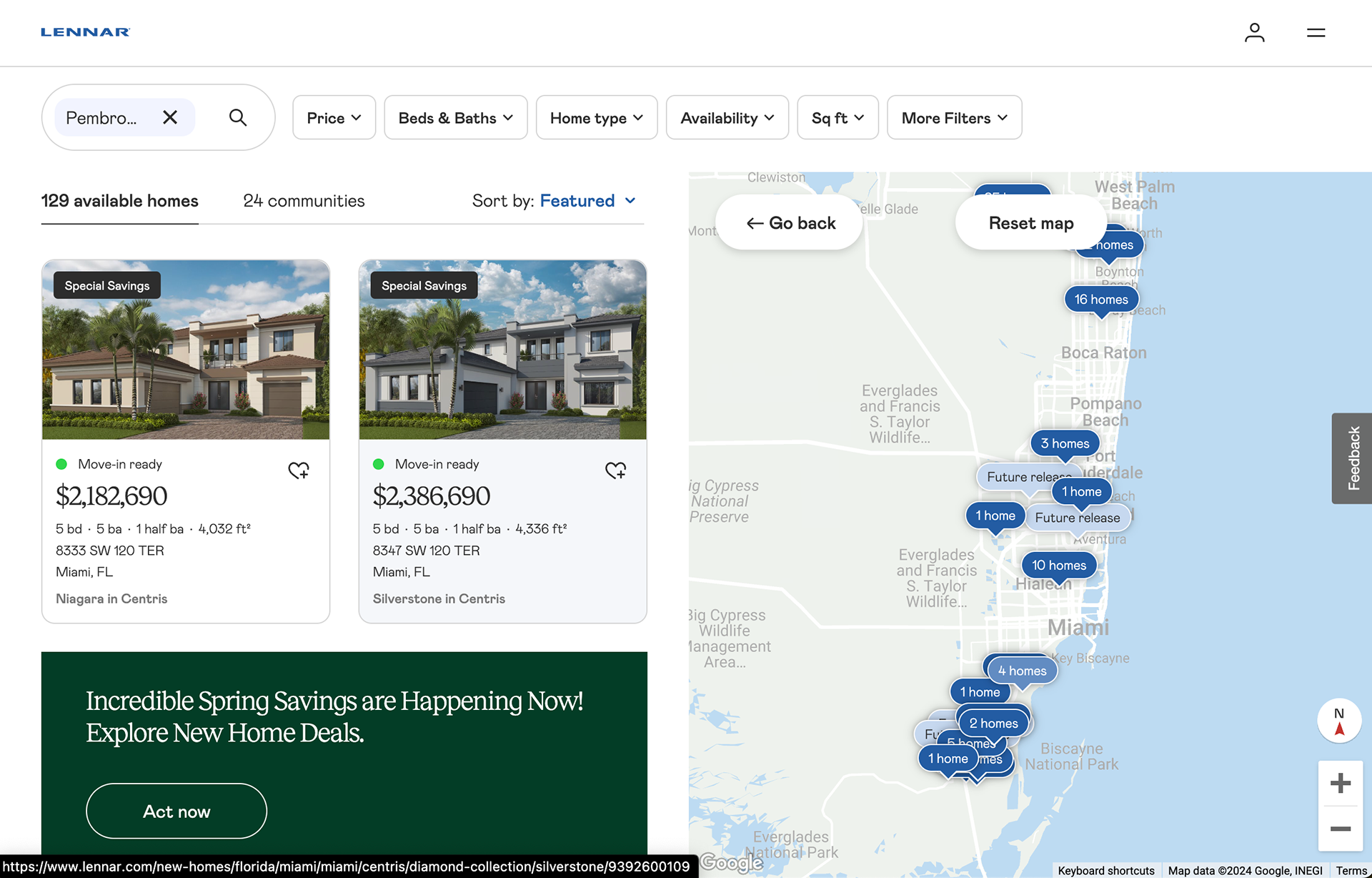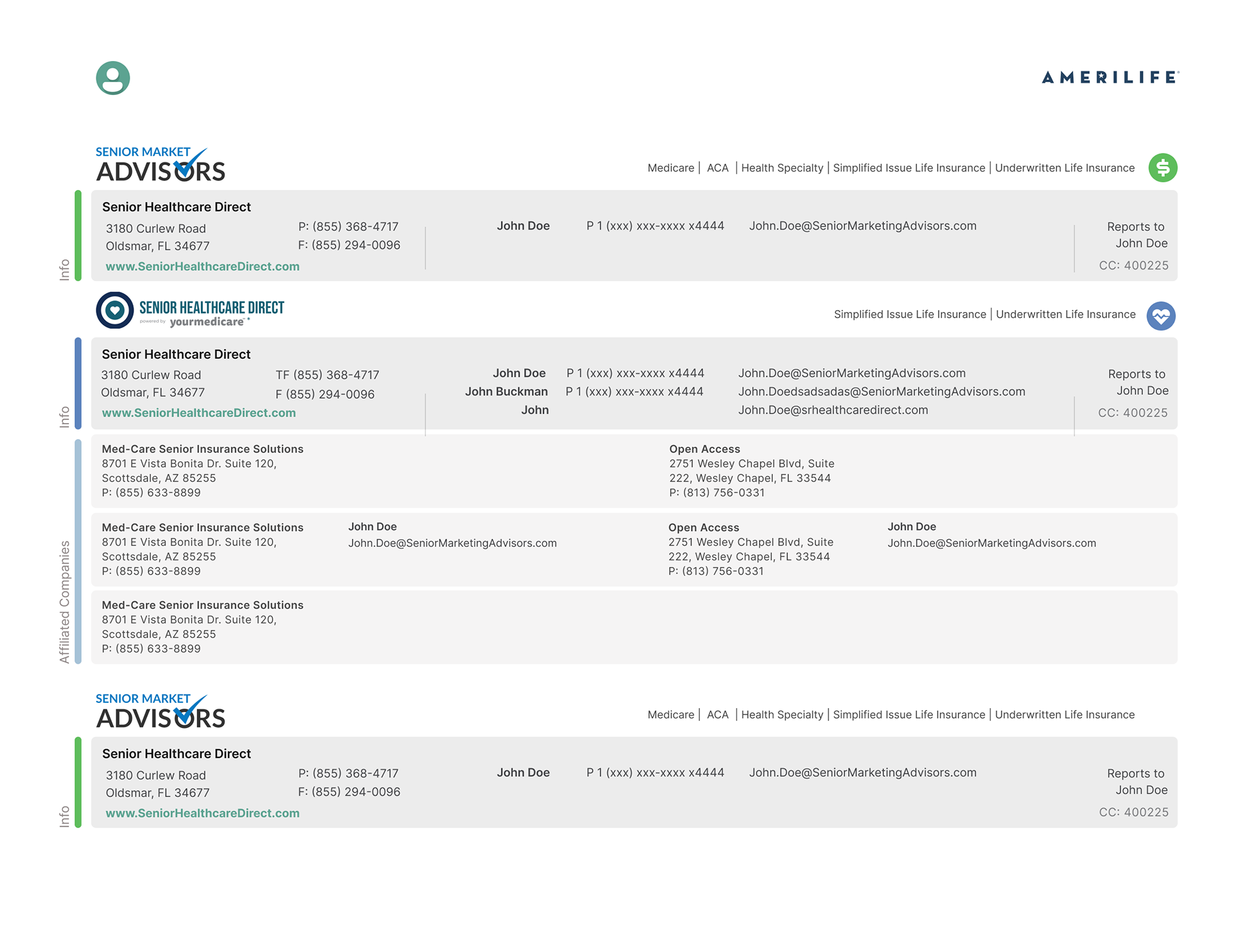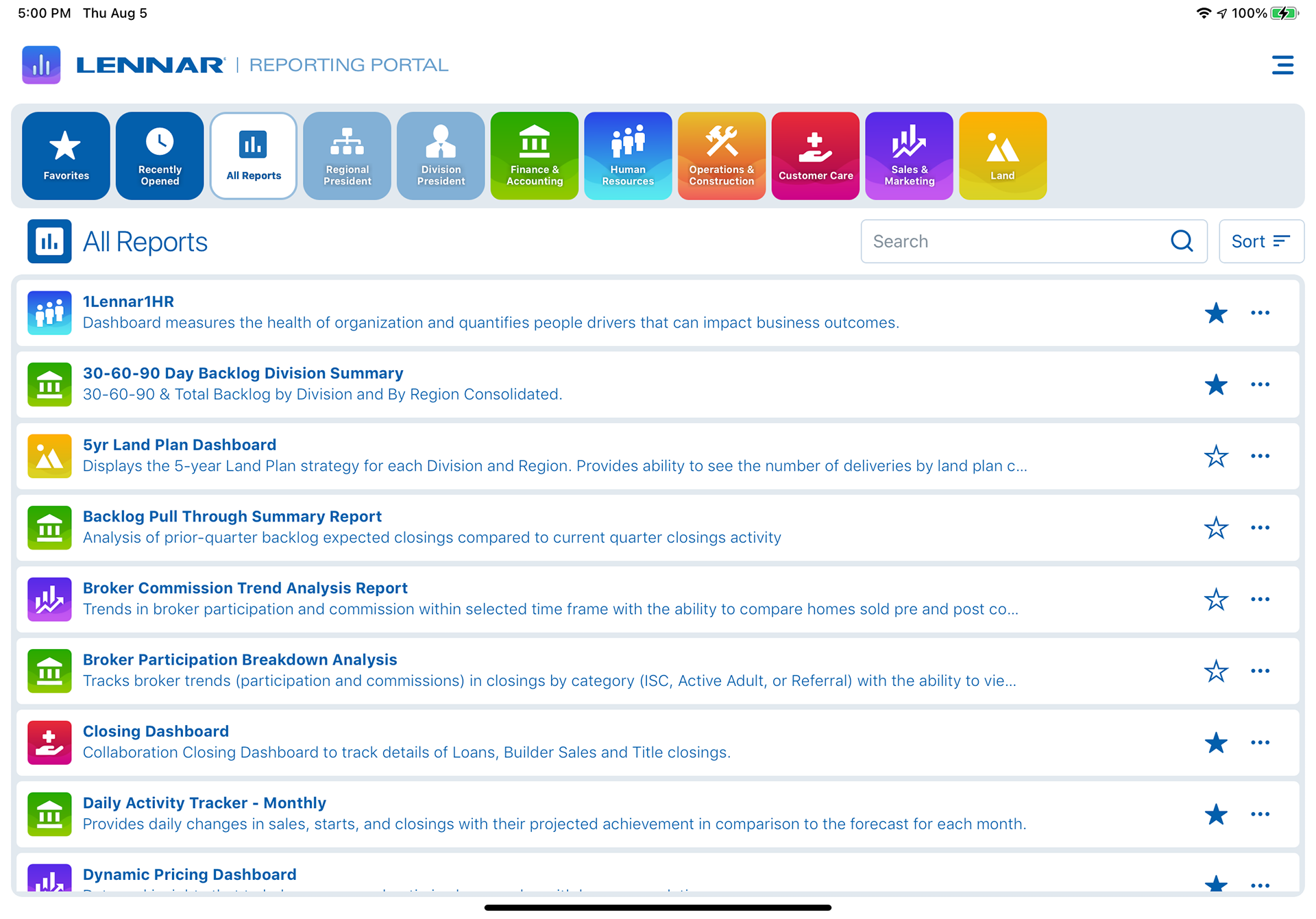
Brand Impact Tracker
AI-powered analytics with Snowflake, generative UI, and enterprise integration.
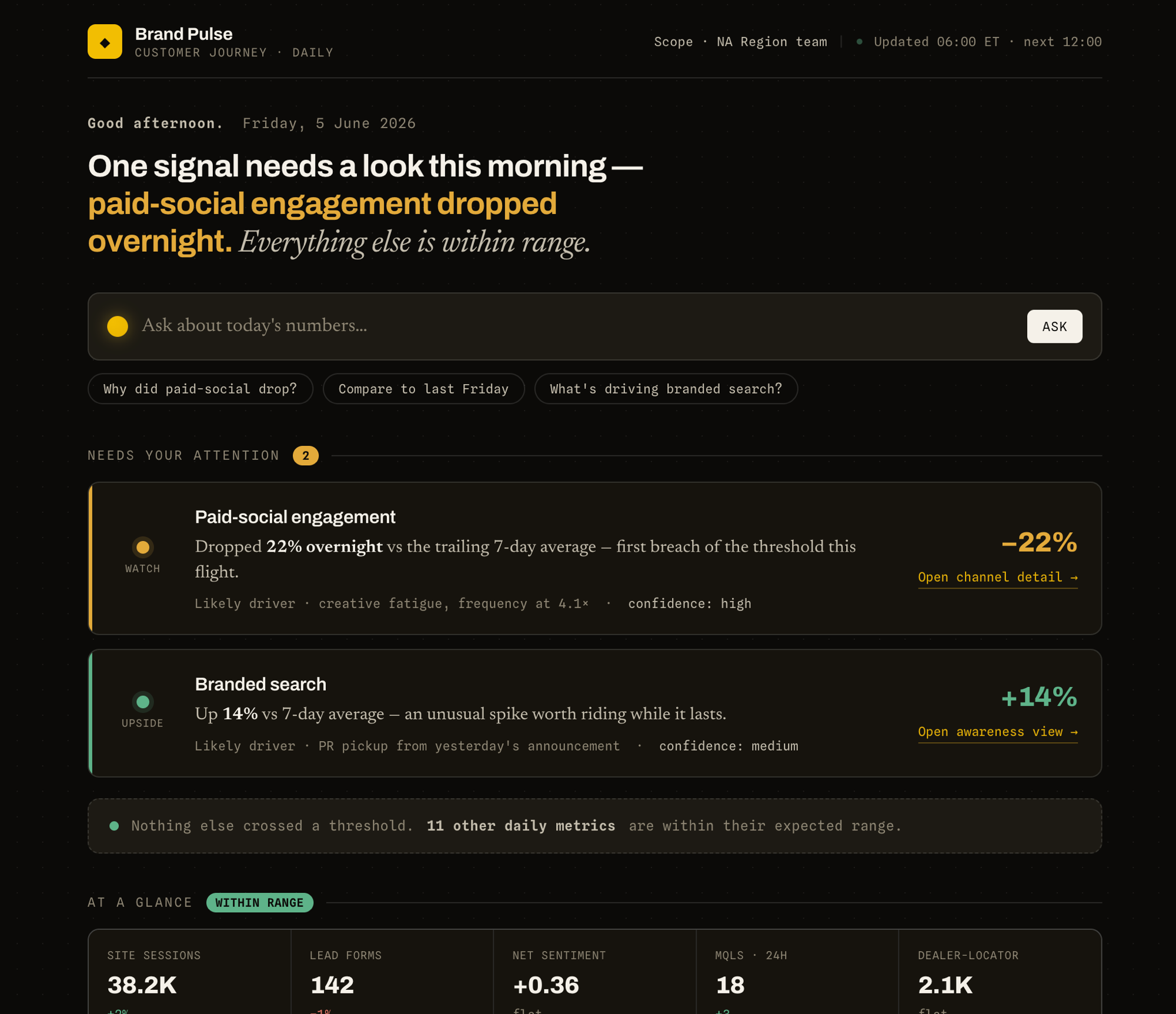 View full interface
The Challenge
Brand performance lived across disconnected tools. Ad-hoc questions entered an analyst backlog measured in weeks, and existing BI tools could not provide a branded experience for the dealer network.
The Solution
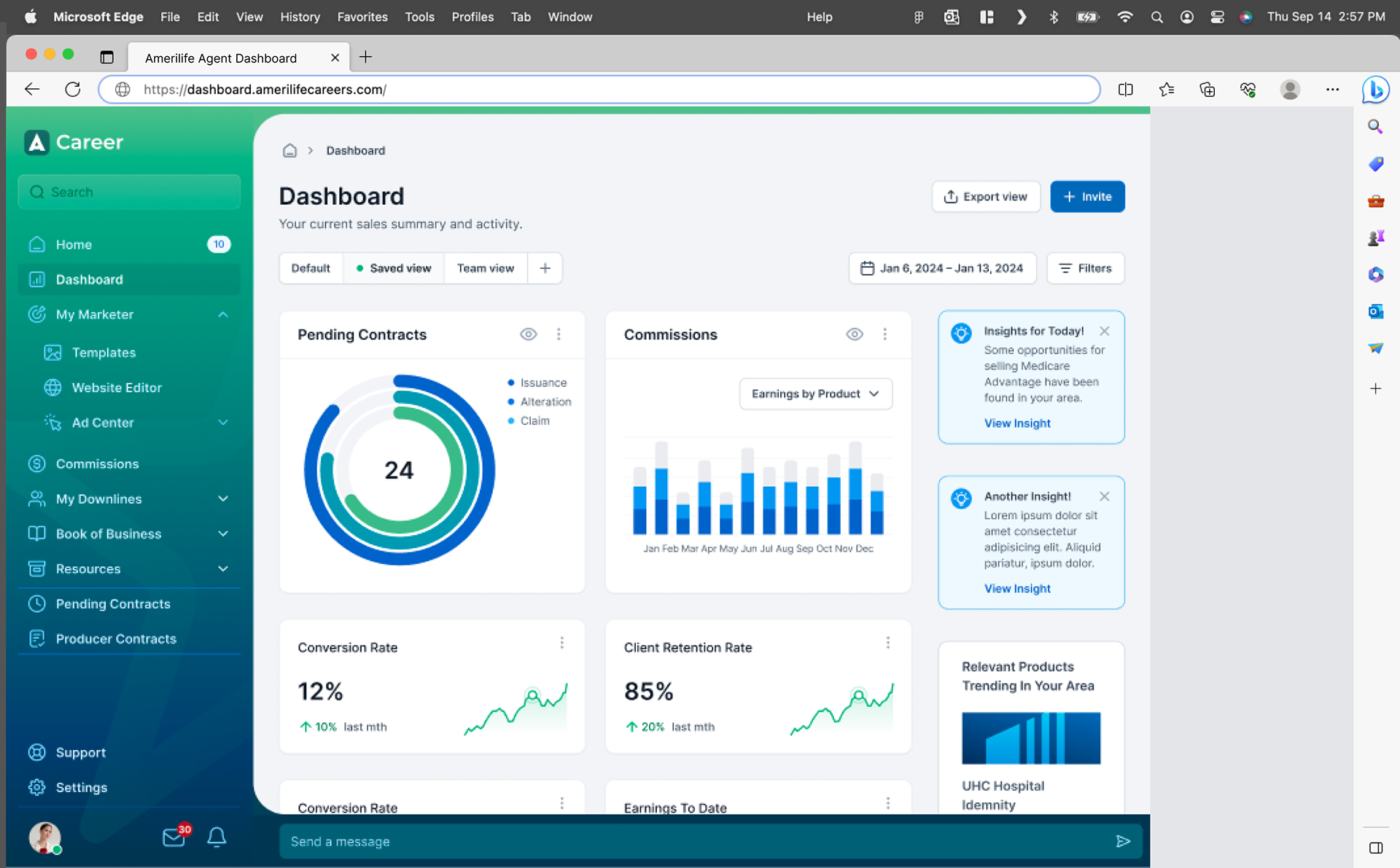
A custom Next.js application with Snowflake Cortex composes structured answers as live React components. Findings, interactive analyses, and scheduled briefs give operational and executive users different ways into the same data.
Architecture
A system, end to endData foundation
- Funnel-stage tables
- Semantic meaning
- Snowflake warehouse
Intelligence
- Snowflake Cortex
- Structured JSON
- One AI capability layer
Product surface
- Next.js + React
- Generative canvas
- Finding · Analysis · Brief
Enterprise delivery
- Existing BI preserved
- Identity-provider auth
- Shared component library
Inside the engagement
The decisions behind the work.
Brand Impact Tracker: an agentic build, built agentically
§ 01 — context
Client context
The brand strategy team at a Fortune 100 industrial manufacturer: a company that reaches its market almost entirely through a global network of independent dealers, and measures brand marketing performance across that entire channel.
§ 02 — challenge
The challenge
Marketing investment flowed across a full funnel, Awareness through Loyalty, but the team couldn’t see it as one system. Behavioral analytics lived in one platform, leads and opportunities in the CRM, everything aggregating into the cloud data warehouse, yet there was no unified view of brand impact across funnel stages. Every ad-hoc question (“which channel dropped, and why?”) entered an analyst backlog measured in weeks, so decisions lagged the questions that prompted them. And the dealers, the people who actually convert brand investment into revenue, could be served nothing at all: no existing BI tool could deliver a branded, multi-tenant, external-facing experience. Meanwhile the company had chartered an enterprise AI initiative whose ambitions the current reporting stack visibly couldn’t meet. The stakes weren’t dashboard aesthetics; they were spend allocated on stale answers and a distribution channel flying blind.
Figure 1 — The feedback-loop system map, with the question-to-new-view loop as the intervention point.
§ 03 — approach
The approach
The engagement began as a narrower question: had the incumbent BI platform hit its AI ceiling? The evaluation said yes, and structurally rather than incrementally. The incumbent and its leading competitor both generate native visuals inside their own chrome; neither can deliver a conversational, generative analytics experience or a branded external distribution layer. That finding forced the first real decision: recommend a custom build without torching the incumbent. Its embed footprint across the CRM and intranet is load-bearing infrastructure, so rip-and-replace was rejected for a three-layer architecture: preserve the existing BI surface with inline AI affordances, add a purpose-built generative surface beside it, thread one AI capability layer through both. The pitch was grounded in the client’s own AI charter rather than dissatisfaction with tooling, which kept the recommendation politically defensible.
The second decision was methodological: run the delivery itself agentically, so the process would demonstrate the thesis. Research surfaced two personas: the operational user who interrogates data weekly, and the executive who needs data composed into narrative on their cadence. The discipline was refusing to invent more. The engagement’s strategy lives as a knowledge bundle (one concept per markdown file, cross-linked, conformed to Google’s Open Knowledge Format) that agents execute from directly, so the strategy can’t rot without the build breaking. Design quality is enforced by a curated craft stack (Impeccable, UI/UX Pro, Taste, plus custom-built skills) encoding hand-made design-system decisions: Fraunces, JetBrains Mono, Inter, dark grammar, brand via palette tokens only. Taste holds whether I’m watching or not. And the POC was treated as a requirements-extraction instrument, not a proof: silent demos, forced tradeoffs.
§ 04 — solution
The solution
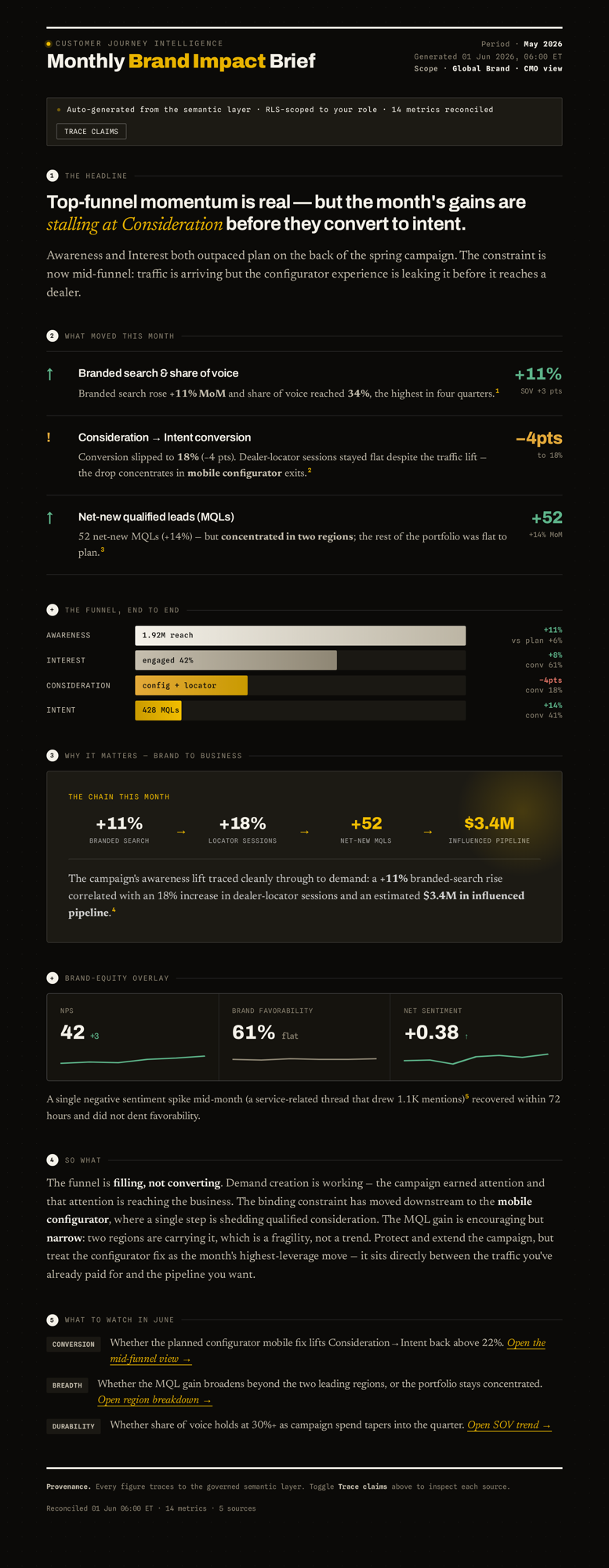
The Brand Impact Tracker: a custom Next.js application with the warehouse’s native AI layer (Snowflake Cortex) as its intelligence engine. Cortex is the brain; the app is the branded body. Agent responses return as structured JSON and render as live React components on a generative canvas, not chatbot text. The information architecture is the two personas made structural: Finding, an atomic insight; Analysis, an on-demand interactive session titled by its originating question; Brief, a scheduled push publication for the executive. Built as a Turbo monorepo with scoped packages, a Storybook-documented component library, and enterprise identity-provider auth; delivered with the client’s data lead, whose pre-aggregated funnel stage tables made the semantic layer a vocabulary exercise rather than a rebuild. This was a two-agent build: Claude Code owned the application layer, Snowflake’s data-native agent owned the warehouse side.
Figure 2 — The artifact taxonomy: the two personas, made structural.
§ 05 — outcomes
The outcomes
live
In production
the proof of concept became a billable delivery engagement, and the platform shipped
3
Layers, nothing ripped out
the existing embedded BI kept, a generative surface added beside it, one AI capability layer through both
sec
Question-to-answer loop
collapsed from analyst-backlog weeks in the demonstrated experience
And a standards-conformant knowledge bundle as a deliverable: the client’s accumulated context outlives everyone’s tooling choices.
§ 06 — reflection
What this taught us
The generalizable insight: in agentic delivery, the durable asset is curated context, not the model. The brief, the build, and the handoff can share one substrate. The product rests on a semantic layer that gives an AI agent trustworthy meaning over warehouse tables; the method rests on a knowledge bundle that gives coding agents trustworthy meaning over the project. Same idea, two altitudes.
Built with Claude Code, Snowflake Cortex, one OKF bundle, two personas, and an unreasonable number of markdown files.